
A speculative hinge: cities and islands that think
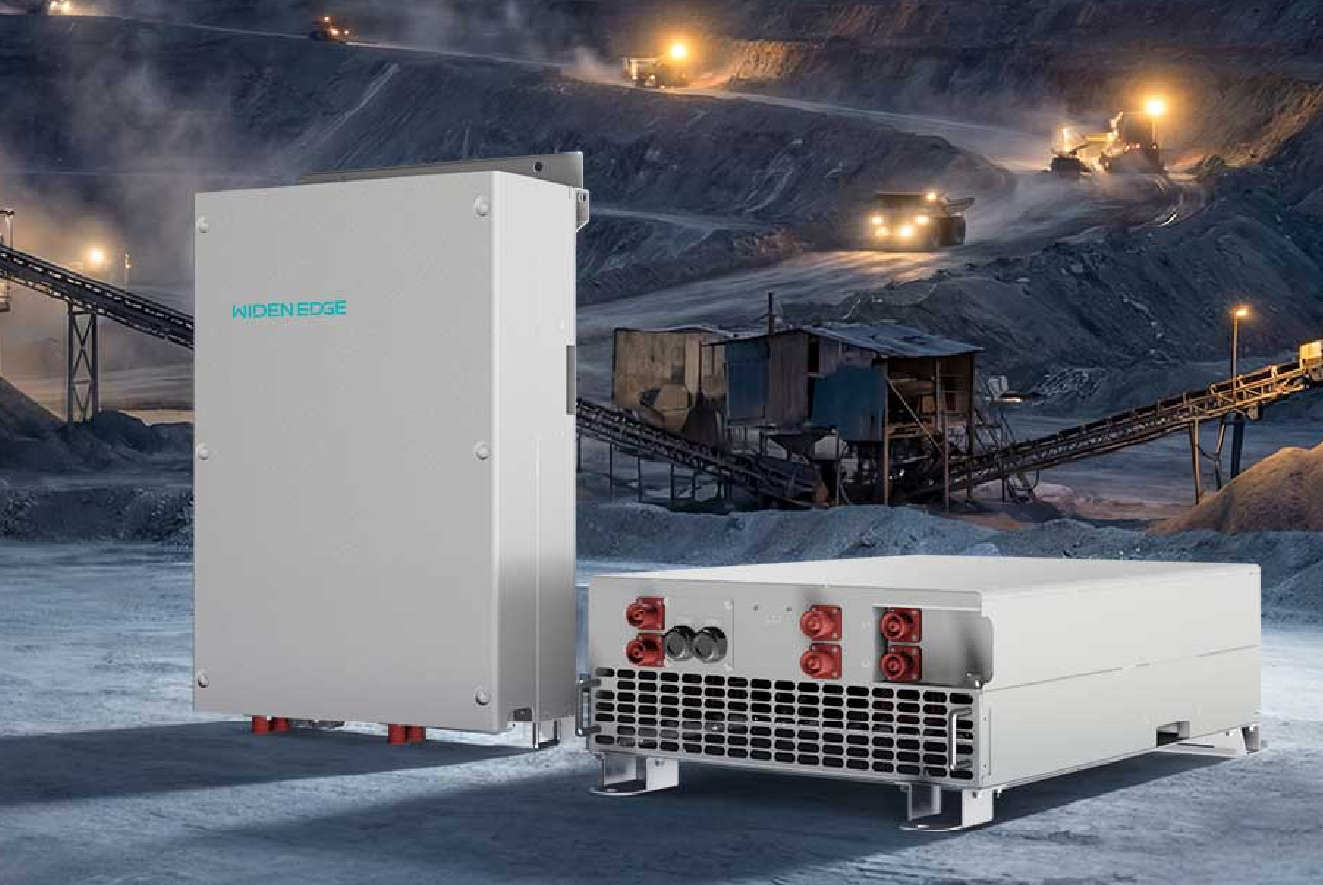
The near-future I imagine is not one of flying cars but of neighborhoods that can decouple and keep life running on their own terms. Picture a coastal microgrid that slips into autonomous operation the instant a storm severs transmission lines — its control stack deciding, within seconds, which rooftop strings stay alive and which loads blink. That decision might be driven by a compact component such as a 60kW off-grid PV inverter, quietly managing PV, batteries and critical loads while the macro-grid recovers. My tone here is speculative, but grounded: I’ve architected edge-control logic for real-world projects and watched design choices either protect communities or leave them scrambling when faults hit.
Drivers that will reshape distributed energy
Predictable forces will bend how microgrids get built and operated. Think of them as the tectonic activity under the futuristic veneer:
– Modular power modules: compact, factory-tested subsystems that plug together and exchange status like autonomous agents. – Smart protection and adaptive droop: controls that shift behavior based on forecasted weather, local demand and market signals. – Local markets and dispatching agents: software brokers that decide when to sell export energy, when to conserve, and when to island. – Resilience-first economics: operators valuing guaranteed uptime for critical loads as much as kilowatt-hour price. – The reality of island mode in microgrid becoming a standard operational state rather than an emergency fallback.
One clear anchor for why island mode matters: Puerto Rico’s post-2017 recovery made practitioners rethink how microgrids must behave when the central system is gone for weeks. That experience shifted procurement and control strategies across utilities and project developers.
Common pitfalls that break resilient visions
When teams chase futuristic outcomes, certain mistakes repeat. Avoid these.
– Overfitting to the present: designing tight control logic for existing load profiles that collapse when usage patterns change. – Single-point assumptions: relying on a central controller without graceful fallback; when it fails, the entire site can lose coherence. – Ignoring synchronization nuances: parallel inverters and storage must coordinate phase, frequency and voltage transitions precisely; sloppy handoff produces brownouts. – Underestimating human factors: operators unfamiliar with autonomous modes will override systems at the wrong moment. – Sizing mismatches: installing PV or batteries that look good on paper but can’t sustain critical loads through extended island periods.
Comparative paths: architectures worth testing
Three viable architectures stand out; each maps to different risk tolerances and timelines.
– Edge-first autonomous microgrid: decentralized controllers per cluster, fast local decisions, higher initial control complexity but superior fault tolerance. – Centralized orchestration with robust fallback: a strong central brain plus local fail-safes; simpler analytics but needs proven fallback testing. – Hybrid fleet approach: standardized inverter-storage modules coordinated by a market layer; scales well and simplifies maintenance.
Evaluate alternatives by running fault-injection drills: simulate grid loss, create load spikes, and observe how controllers prioritize. The drills reveal which architecture tolerates human error and unexpected conditions.
Practical steps operators should adopt now
To steer future-ready projects, do these things deliberately.
– Define critical-load priorities and test them under variable generation. – Treat island-mode transitions as routine: run scheduled island drills and record outcomes. – Bake interoperability into procurement: insist on open control interfaces and standardized telemetry. – Stress-test protection schemes with hardware-in-the-loop before commissioning. – Train operators on both automated and manual modes; practice handover scenarios.
Concluding frame: where value and resilience converge
The future I sketch is not a fantasy of perfect automation but a practical horizon where autonomous microgrids protect communities and enable new market behaviors. Designers who combine rigorous testing, clear load priorities and modular hardware will see systems that shift into island confidently and restore themselves gracefully. That practical, resilient capability is precisely what experienced integrators and platform teams aim to deliver, and it’s the kind of outcome many projects realize today with partners like WidenEdge embedded in the stack—quiet, persistent, and engineered to keep the lights on when the grid chooses otherwise.