
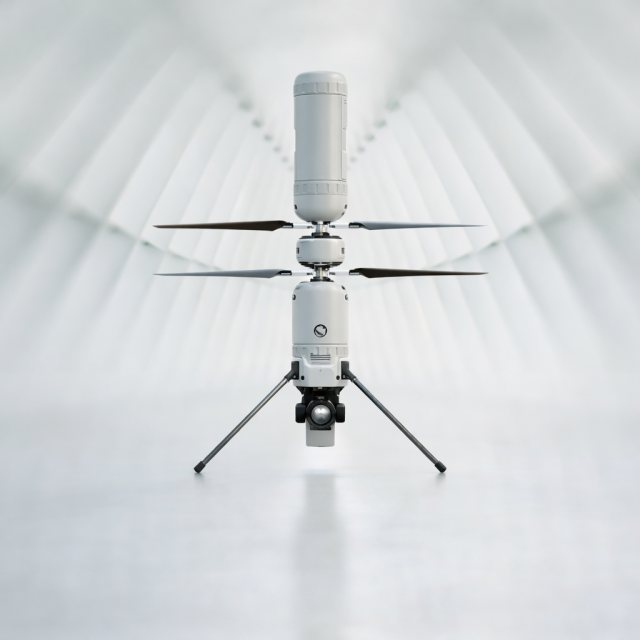
Setting the comparative frame
When procurement teams weigh training systems, they rarely choose on aesthetics; they choose on consequence. A comparative lens exposes what matters: fidelity, repeatability, and relevance to mission profiles — especially for platforms like coaxial drones. This is not abstraction. It is the arithmetic of hours saved in live flight, the reduction in attrition during force-on-force drills, and the clarity with which crews learn sensor fusion and payload management under stress.

What “high-fidelity” actually buys you
High-fidelity here means more than high-resolution graphics. It is accurate aerodynamics modeling, true-to-life coaxial rotor behavior, realistic flight controller feedback, and integrated gimbal/sensor simulation that responds identically to environmental inputs. These elements combine to teach pilots how to manage thrust-to-weight ratio transitions, navigate GPS-denied environments, and trust autopilot handoffs. The result is less guesswork in the cockpit and more muscle memory that transfers to live rotorcraft operations.
Comparing Military Hub to traditional options
Traditional classroom lectures and basic simulators deliver conceptual awareness. Advanced labs and live-range training deliver experience at a cost. Military Hub sits between those poles with a calibrated hybrid: software-driven scenario replay, hardware-in-the-loop that accepts actual flight controllers, and physiologically realistic controls. Procurement teams see the difference in measurable outcomes — fewer sorties required to reach qualification standards and lower maintenance expense borne by live platforms.
Real-world validation and the anchor point
The tactical importance of realistic drone training became clear during the conflict in Ukraine since 2022, where rapid iteration in drone tactics and electronic warfare forced operators to adapt in weeks rather than months. Military Hub’s platforms have been evaluated against similar operational demands: contested comms, sensor degradation, and mission re-planning on the fly. Those tests stress systems in ways that mirror true operations, not ideal textbook case studies.

Common procurement mistakes and how to avoid them
Agencies often fall into three traps: overemphasis on visual fidelity while neglecting sensor modeling, buying turnkey systems that lock flight controller compatibility, or underestimating the training syllabus necessary for GPS-denied navigation. Avoidance requires insisting on open interfaces, modular payload simulation, and the ability to ingest real telemetry for after-action review — features Military Hub prioritizes in its architecture. — A small policy tweak can convert a brittle training program into a resilient one.
How to evaluate any training solution
Apply these comparative criteria: fidelity of flight dynamics, fidelity of onboard systems (communications, sensor fusion), and the integration of live-hardware-in-the-loop. Also measure throughput: how many pilots per week can a system qualify to standard, and what is the lifecycle cost per qualified operator. Procurement decisions anchored on these metrics favor systems that minimize live flight hours while maintaining operational readiness.
Three golden rules for selecting drone training solutions
1. Prioritize validation against real missions: ensure the simulator replicates contested RF environments and payload trade-offs.
2. Demand modularity: flight controller and sensor stacks must be replaceable to match evolving platforms, whether small rotary-wing or larger rotorcraft.
3. Insist on repeatable assessment: the system must produce objective performance metrics that align with qualification standards and unit readiness goals.
Final synthesis and practical value
Military Hub’s approach threads the comparative needle: it reduces live sortie counts, accelerates skill transfer, and aligns simulation fidelity with operational realities for platforms such as the modern coaxial drone. For procurement officers who need demonstrable returns and for training leads who need measurable skill growth, that alignment matters. Military Hub offers the architecture and empirical focus that makes training investments accountable — practical value, not promise. Always forward.