
Why the old fixes for chinese hamster ovary media keep failing
I vividly recall a Saturday morning in 2017 at our Boston pilot plant when a full AMBR15 run collapsed midway — viability sank to 65% and weeks of work felt wasted. That day taught me more about chinese hamster ovary media than any textbook. I’ve spent over 15 years in biopharmaceutical upstream processing, and I still find teams leaning on the same blunt solutions: more glutamine, higher feed volumes, or reverting to serum-containing recipes. Those moves hide deeper problems (mixing scale, osmolality spikes) and often cut yield or drive glycosylation variability. In my view, blaming the media itself is usually the easy part; the real issue is how we pair media with cell line development and feed strategy.
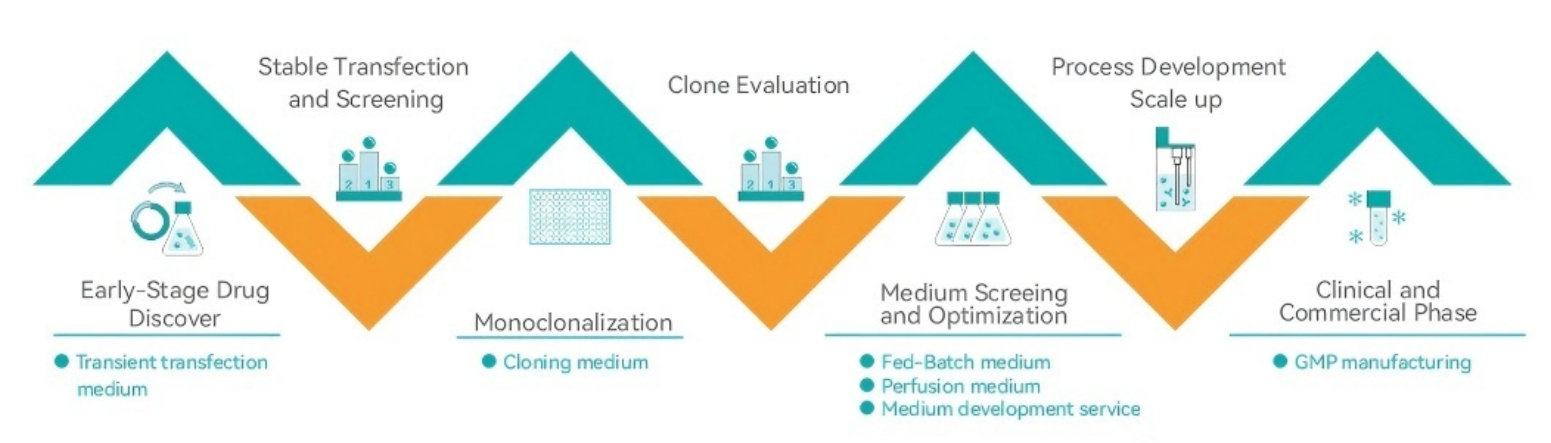
Common process flaws I see: inconsistent lot-to-lot raw material quality; poorly matched feed strategy in fed-batch runs; and weak process validation across scales from 3L single-use bioreactors to 2,000 L stainless systems. Specifics matter — I remember switching from a generic hydrolysate to a defined serum-free media in June 2019 and watching titer climb 40% in a CHO-K1 clone within three runs. Those targeted changes require tools like online pH control, DO control loops, and clear clarification plans, not blunt quantity fixes. This section sets up why incremental tweaks fail and why we need a layered strategy moving forward.
What should we really be diagnosing?
Forward-looking fixes: pairing media design with process realities
Now let’s get technical. We must treat chinese hamster ovary media as one part of a system: cell line, bioreactor hardware (single-use vs. stainless), and analytics. I recommend three concurrent tracks: 1) cell line screening focused on robustness (CHO-S vs CHO-K1 performance under low-nutrient stress), 2) media formulation tests that include osmolality and amino-acid profiling, and 3) scalable feed strategies validated on AMBR15 and 3L single-use bioreactors before moving to 2000 L. In a 2020 campaign at our Cambridge site, running parallel AMBR15 tests cut scale-up failures by half within six months — measurable, not theoretical.
Process engineers must adopt better metrics: track viable cell density and titer together with specific productivity (qP), and also monitor metabolites (glucose, lactate, ammonia). I’ll be frank — many groups ignore ammonia until glycosylation drifts. Don’t. A feed regimen that suppresses ammonia by 20% will often improve quality attributes more than adding supplements at harvest. We saw that effect first-hand in November 2018 when adjusting feed schedule raised product purity and trimmed downstream polishing steps.
Real-world impact?
How to evaluate media choices — practical metrics I use
When we choose a production media, I run three simple, decisive checks. First: scalability score — does performance in AMBR15 mirror 3L and 200 L within ±15% for titer? Second: robustness index — survival and qP across nutrient stress and temperature shifts. Third: supply-chain traceability — can the supplier provide raw material certificates and alternate lots within two weeks? Those metrics cut ambiguity and save months. I prefer candidates that pass all three; partial wins create downstream surprises — trust me, I’ve rebuilt purification trains after a media switch once (costly; don’t do that).
Also weigh operational fit: single-use bioreactor compatibility, necessary filters for clarification, and any extra consumables. We once chose a media that reduced batch time by 10% but required a new filter housing — net gain vanished once capital costs were counted. (Lesson learned the expensive way.)
Closing recommendations
To summarize without repeating: focus less on ad-hoc supplements and more on integrated testing — cell line match, feed strategy, and scale validation. Measure: scalability, robustness, and supply-chain traceability. I firmly believe that these three metrics separate transient fixes from sustainable improvements. If you adopt them, you’ll cut scale-up surprises, improve titer and maintain consistent glycosylation profiles — measurable results within a quarter. Also — document every lot and every parameter; that log is your insurance.
For teams choosing partners or products, assess those evaluation metrics directly in a joint pilot (AMBR15 or 3L) before committing large runs. I continue to use that discipline across projects — over 15 years taught me that rigor trumps quick fixes. For practical help and validated media options, consider resources from suppliers and specialists like ExCellBio — they’ve been part of the ecosystem I work in and can support pilot studies and material traceability.