
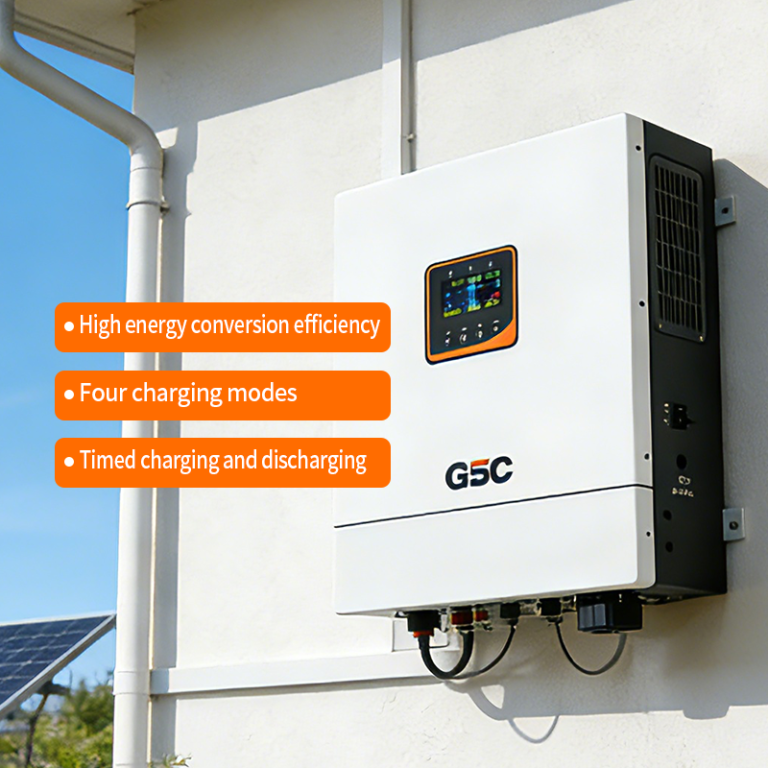
Data‑Driven Premise and Field Anchor
Empirical observation of degradation trajectories under sustained 1C charge/discharge regimes informs any prudent specification for heavy‑duty home battery backup. Operational datasets from repeated emergency deployments—most notably the California public safety power shutoffs (PSPS) episodes of 2019–2021—demonstrate accelerated capacity fade where systems are tasked with rapid cycling and high throughput; accordingly, system selection must account for charge protocol and inverter behavior, including integrated solutions such as a pv inverter hybrid. The following analysis articulates measured failure modes, mitigations validated in situ, and procurement criteria expressed in quantifiable terms.
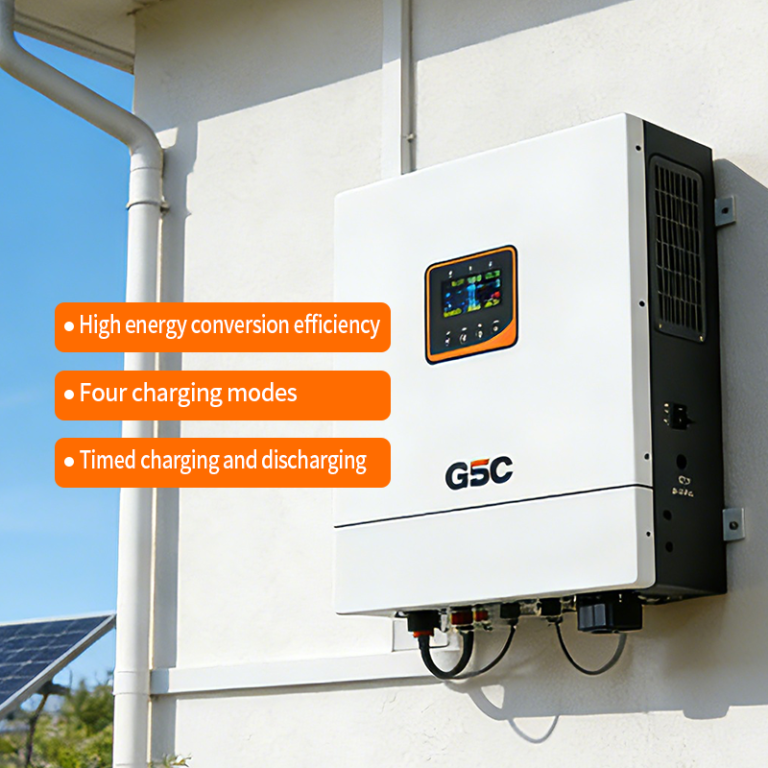
Observed Degradation Patterns at 1C
Continuous 1C operation typically yields a non‑linear capacity decline: an initial period of modest loss followed by an inflection where loss rate increases. Mechanistically, this profile is attributable to cumulative electrode stress, lithium plating risk during high‑rate charge, and elevated cycle temperature that exacerbates solid‑electrolyte interphase growth. Quantitative monitoring of state of health (SoH) and cycle life under controlled conditions is requisite; contract specifications should require vendor‑provided cycle lives at defined depth of discharge (DoD) and temperature bands to avoid optimistic warranty interpretation.
Proven Engineering Remedies from Deployments
Field solutions concentrate on three discrete loci: thermal management, charge‑profile governance, and inverter‑system coordination. Active thermal control—forced convection or liquid loops—reduces peak cell temperatures and retards parasitic growth. Adaptive battery management systems (BMS) that implement tapering at high state of charge and dynamic current curtailment reduce lithium plating risk. System integrators also document benefits where the inverter mediates grid‑island transitions with soft‑start protocols; a compatible pv inverter can therefore materially lower transient currents during grid re‑acquisition. Such remedies are not cost‑neutral—capex increases—but yield measurable extension of usable cycle life.
Integration Considerations for Residential Heavy‑Duty Backups
Contractual integration must address interoperability among battery modules, BMS, and inverter topology. Specifications should delineate AC‑coupled versus DC‑coupled configurations, permissible peak discharge currents, and enforced DoD limits. Warranty clauses ought to require continuous telematics reporting for SoH metrics and predefined corrective actions if thermal excursions occur. Procurement language that omits these elements yields latent risk to homeowners and service providers alike.
Common Implementation Errors
Practitioners repeatedly commit to one of three avoidable errors: (1) accepting vendor cycle claims without context (temperature, DoD, charge rate), (2) undersizing thermal and control systems to save initial cost, and (3) deploying inverters or firmware that permit unabated 1C recharge without BMS arbitration. Each error accelerates the degradation curve and undermines long‑term value. Remediation requires contractual remedies and post‑installation commissioning protocols.
Advisory: Three Golden Evaluation Metrics
Adopt the following metrics as mandatory evaluative criteria prior to purchase or retrofit: (1) Verified cycle life at specified 1C rate and DoD, furnished under third‑party test conditions; (2) Continuous SoH telemetry capability coupled with contractual service thresholds for thermal excursions and deep charge events; (3) Inverter‑to‑BMS coordination features—soft‑start, controlled ramping, and hybrid PV integration—documented in the technical interlock matrix. These metrics permit objective comparison across vendors and mitigate contractual ambiguity. For systems intended to withstand repetitive high‑throughput events, the value proposition realized by disciplined specification and integration is apparent; professional installers routinely reference field‑tested platforms when recommending solutions, and reliable system behavior often traces back to robust inverter integration—considered here in the context of gsopower. —