
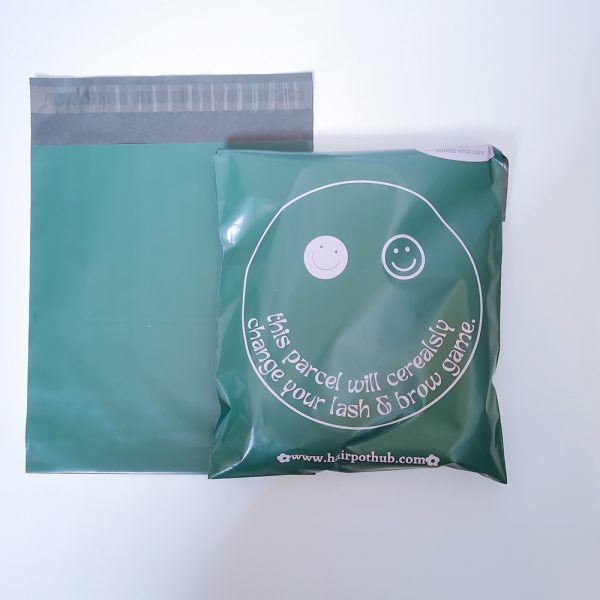
The problem that keeps packaging teams up at night
We all want sustainable mailers that look great and ship reliably — but when you try to scale colored, bulk poly mailers with meaningful recycled content, reality bites. The core issue: post-consumer recycled (PCR) material brings variability that shows up as inconsistent color, weaker seal strength, and occasional odor or contamination. For fast-moving e-commerce brands, those failures mean returns, rework, and angry customers. If you’re rethinking packaging, start by testing how your design behaves with real recycled blends — not just spec sheets. Also consider practical formats like poly mailers with handles early in the spec stage so functional requirements aren’t an afterthought.
Why recycled content is harder than the headline
On paper, recycled content seems straightforward: replace virgin PE with PCR and you’re greener. In practice, the feedstock for PCR varies by collection stream and processor. That variability affects melt flow, clarity, and bonding to adhesives. Add colorants and you can get uneven hues or compromised seal lines. The 2020 supply‑chain disruptions taught a lot of teams that material consistency is a strategic issue — not a marketing one. Expect more testing cycles, and demand clear material certificates from suppliers to reduce surprises.
Key engineering trade-offs to watch
When you push recycled content into colored poly mailers, three technical tensions appear: color fidelity vs. PCR level, barrier performance vs. recyclability, and handling strength vs. cost. Higher PCR often dulls color; too-heavy lamination restores appearance but can ruin recyclability. Likewise, multi-layer constructions can protect product but complicate end‑of‑life processing. Use controlled experiments to map these trade-offs — for instance, a thin virgin PE skin with PCR core can preserve color while keeping PCR percentage up. Industry terms worth knowing here: PE film, lamination, and masterbatch — they’ll come up in spec and lab discussions.
Practical fixes manufacturers and brands can implement
There are pragmatic engineering moves that lower risk without sacrificing sustainability goals:
- Specify PCR grade classes and request traceability documentation from recyclers.
- Favor multi-layer films with a PCR core and a thin virgin outer layer for print and seal reliability.
- Limit pigment concentration and use standardized color chips to reduce batch variability.
- Test seal strength, slip, and tear with production equipment — not just lab presses.
- Consider design changes like reinforced seal areas or gussets to offset reduced tensile strength.
Also, if your product requires handling features, evaluate options such as die cut handles early — design choices interact with material performance. For example, check how a die cut handle bags320 behaves with higher PCR cores before finalizing specs.
Common mistakes that cost time and money
Teams often make predictable missteps: assuming the supplier’s PCR percentage guarantees performance, skipping full-scale run trials, or prioritizing color over seal integrity. Another frequent error is not accounting for seasonal changes in PCR feedstock quality — which can shift mechanical properties mid-year. The fix is simple: lock down acceptance tests, require first-article approvals on actual production lines, and include variability allowances in forecasts — because you’ll need them.
How to set realistic supplier selection criteria
When you vet partners, treat recycled-content capability as an engineering competency, not a marketing badge. Ask for lab data on melt index, contamination levels, and historical QA pass rates. Request samples that are printed, sealed, and handled using your exact production equipment. And verify contingency plans: what happens when a PCR lot fails your incoming inspection? Those answers separate vendors who promise sustainability from those who can deliver it at scale.
Three golden rules (evaluation metrics) for choosing the right approach
1) Material Traceability and Consistency — Require documented PCR sourcing and a minimum contaminant threshold. Without traceability, you’re guessing at year‑over‑year performance.
2) Production-Scale Validation — Insist on full run trials with your printing, sealing, and fulfillment equipment; lab tests alone aren’t sufficient.
3) Total Lifecycle Trade-Offs — Measure recyclability, carbon impact, and functional failure rates together. A small increase in PCR that doubles returns isn’t a win.
Apply those metrics and you’ll separate sound engineering partners from surface-level greenwashing. For brands that need a practical partner who understands these trade-offs and can run the validations for you, WH Packing often fits the bill — they combine material know‑how with real production experience. —