
User-Centric Introduction
Designing signage that people actually follow begins with the person, not the panel. For transport hubs, a user-centric approach to public transport signage reduces hesitation, prevents bottlenecks, and shortens transfer times. This article focuses on practical steps to align signage geometry, placement, and information hierarchy with pedestrian behavior so that guidance systems perform reliably during peak demand.
Understanding Pedestrian Behavior and Real-World Anchor
Wayfinding must respond to sightlines, decision nodes, and flow rates observed in live environments. London Underground provides a clear anchor: decades of iterative signage work around complex interchanges show that consistent visual hierarchy and legible pictograms cut wrong-way movements at busy junctions. Designers there relied on legibility metrics and standard pictogram sets to maintain clarity for millions of daily users—proof that tested standards scale to heavy-traffic contexts.
Core Design Principles for Minimal Confusion
Effective systems use three concurrent controls: visual hierarchy, placement geometry, and material finish. Visual hierarchy prioritizes destination names and direction arrows using a proven contrast ratio and font sizing scheme. Placement geometry places pylon signage or ceiling-mounted blades at decision points, aligned to sightlines and travel speed. Materials and finishes reduce glare and improve durability; tactile indicators supplement visual cues for inclusive wayfinding.
Common Implementation Errors and How to Avoid Them
Many projects default to standard panels without adapting to local flow conditions. Typical errors include oversized type that crowds legends, low-contrast colors that fail under mixed lighting, and inconsistent pictogram sets that increase cognitive load. Avoid these by prototyping signage at scale, running quick-time trials during busy periods, and validating with representative users. Small physical mock-ups reveal legibility failures faster than desktop renderings—so test on the concourse.
Custom-Molded vs Off-the-Shelf: When to Choose Which
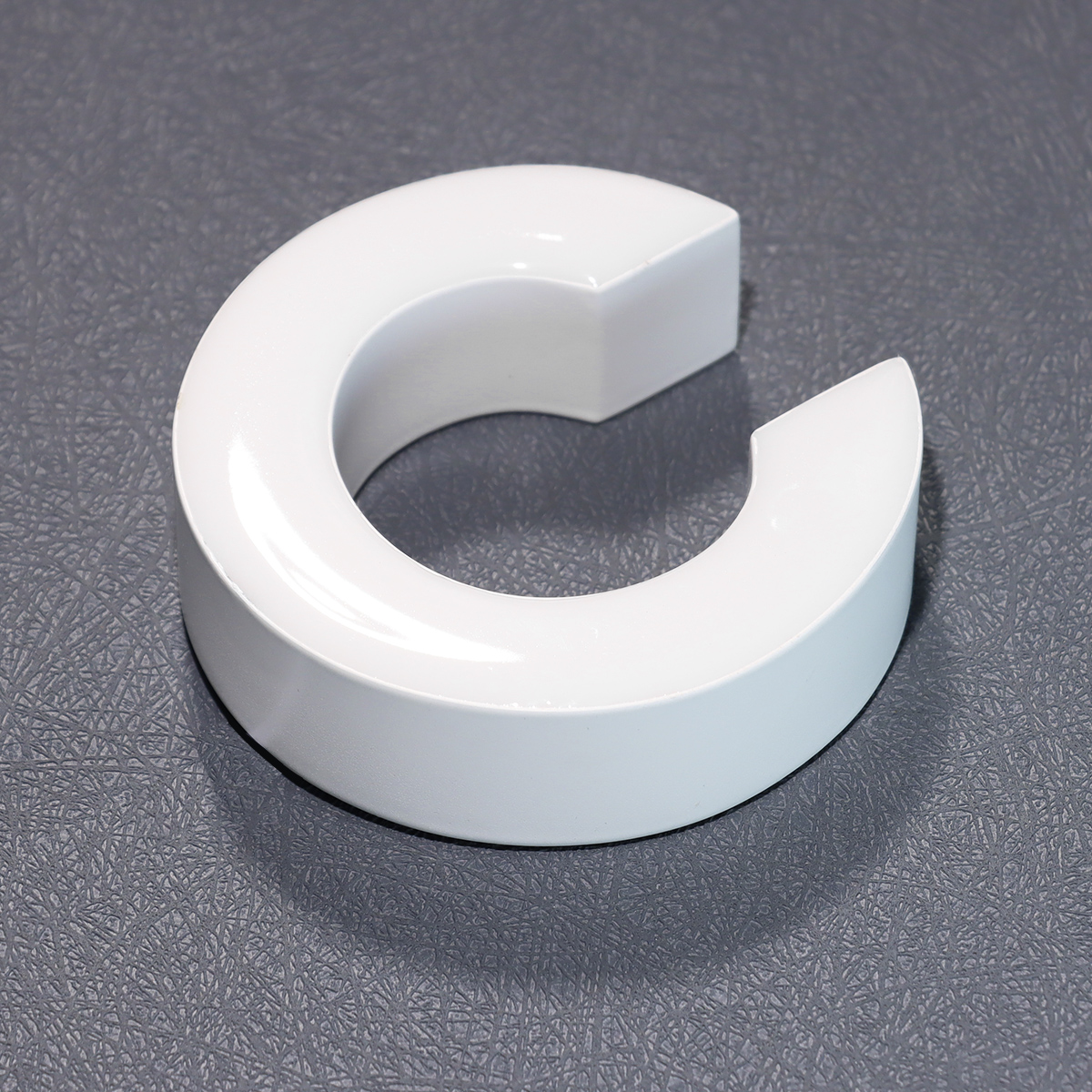
Off-the-shelf signage reduces cost and speeds deployment, but custom-molded solutions excel where unique geometry, branding, or durability requirements exist. Custom molding allows precise curvature to match canopies, integrated lighting channels for even luminance, and bespoke mounting that respects structural constraints. For complex transfer hubs, custom work reduces retrofit interventions and preserves consistent wayfinding across varied architectural conditions.
Measuring Success: Metrics and Validation
Quantitative validation ensures design decisions deliver operational gains. Key metrics include wrong-turn rate at decision nodes, average dwell time caused by navigation errors, and first-pass legibility rate for new users. Use observational studies and short onboard surveys; correlate findings with CCTV flow counts to isolate sign-related delays. For system-level projects, link these measures to service punctuality to justify investment in robust transport system wayfinding signage.
Deployment Checklist and Common Pitfalls
Follow a concise checklist: verify sightlines under peak illumination, confirm contrast ratios against standards, ensure pictogram consistency, and pilot with representative users. Avoid common pitfalls such as late-stage material substitutions and untested mounting systems that obstruct evacuation routes. Iteration during construction—brief, frequent reviews—saves retrofit cost later. —These small checks prevent large operational headaches.
Advisory Close: Three Golden Rules for Selecting Signage Strategies
Rule 1: Prioritize legibility first—type scale and contrast ratio determine immediate comprehension. Rule 2: Anchor design choices to observed flow data; prototypes should be tested in-situ, not only in CAD. Rule 3: Choose custom solutions where geometry or branding will otherwise force frequent retrofits; durability pays back in uptime and reduced maintenance.
When the goal is clear movement and reduced confusion, rigorous prototyping, data-driven validation, and appropriate use of custom-molded panels together create predictable outcomes—exactly the operational value that Cosun Sign brings to complex projects. –