
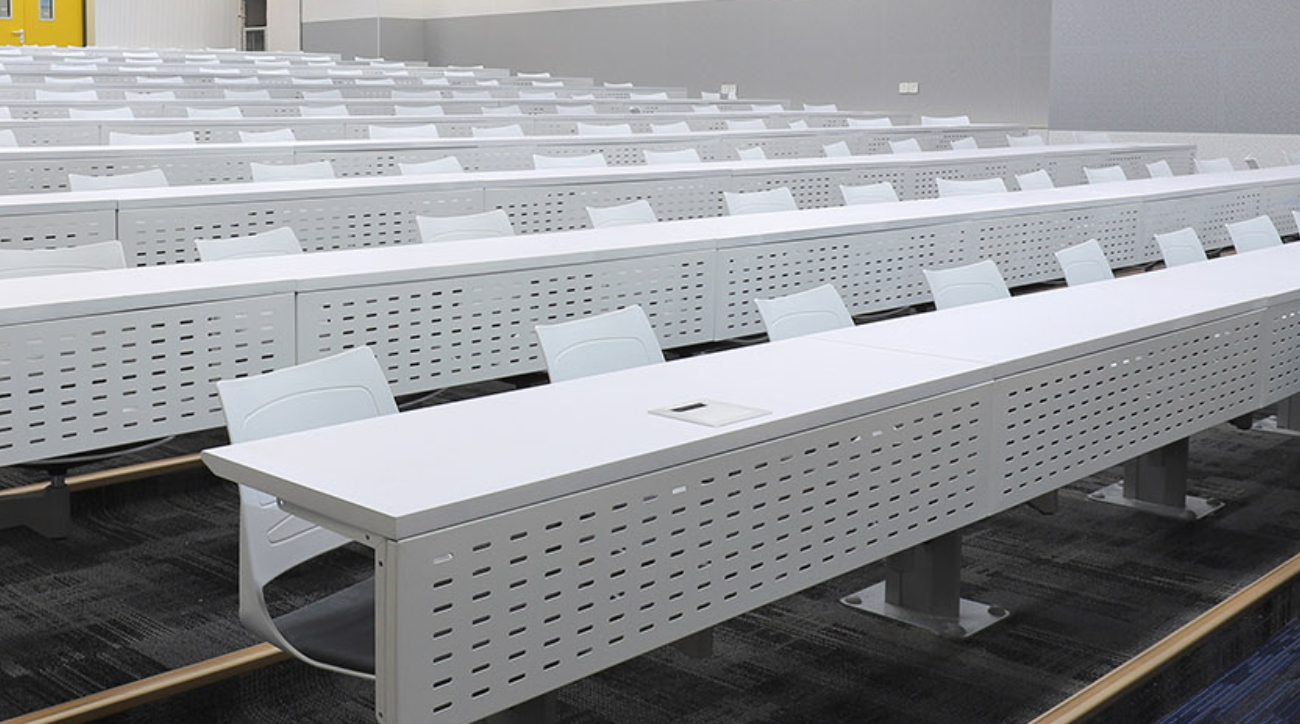
A comparative view on production strategy
Deciding how to scale seating and table technologies starts with a clear comparison between repeatable, high-volume lines and tailored, specialist builds. For venue operators and contractors the distinction is practical: one path favors consistent output and predictable costs; the other prioritizes bespoke ergonomics and sightlines. Early on, consider how choices affect auditorium layout and integration with AV rigs—these are not add-ons but central constraints. When fitting a mid-size auditorium, for example, coordinating with a theatre seating partner changes how you budget for row spacing and sightline adjustments.
Materials, ergonomics, and design trade-offs
Materials determine both production speed and end-user comfort. Standardized upholstery and modular frames speed assembly and reduce defects; premium foams and custom timber veneers raise per-unit value but slow throughput. Ergonomics must remain non-negotiable: seat pitch, lumbar support, and armrest layout all influence attendee fatigue and perceived quality. Trade-offs often show up in sightline optimization—compact row spacing can increase capacity but reduce sightline quality unless rake and seat depth are rebalanced. Small design choices become cumulative; the wrong upholstery can drive both warranty calls and rework.
Manufacturing workflows — lean lines versus craft bays
Compare two factories: one organized around lean, repeatable cells influenced by the Toyota Production System; the other arranged as flexible craft bays that accept mid-order changes. TPS provides proven throughput gains and reduces variation, a real-world anchor that large manufacturers adopt when scaling. Lean lines favor jigs, fixed fixtures, and a limited bill of materials; they perform well when uplift mechanism designs and hinge tolerances are standardized. Craft bays excel with complex sightline needs and custom finishes, but lead times lengthen and quality depends on skilled technicians. Choose based on order cadence—frequent, similar orders favor lean; sporadic, unique builds favor craft.
Common mistakes and practical alternatives
Teams often underestimate logistical friction. Procurement that treats ergonomic specifications as optional creates late-stage changes and costly retrofits. Another typical error is misaligned testing: ensuring fire retardant performance through proper sample cycles is essential—skip it and you face long delays. —Mitigation is straightforward: lock core specs early; route variant options to a separate line; run physical mock-ups for sightline checks.
Alternatives include splitting production: standard seats on a high-speed line, specialty seating routed to a dedicated workshop. This hybrid model preserves efficiency while allowing custom work without contaminating the main flow.
Operational production teardown
An operational teardown highlights three stages: standardization (part families, fixed fixtures), validation (sample assemblies, sightline and ergonomics checks), and scale-out (parallel lines, quality gates). Integrate simple test jigs for uplift mechanism tolerances and assign clear acceptance criteria for row spacing and upholstery adhesion. Track cycle times per station and yield percentages—these metrics expose bottlenecks quickly. For documentation, include {main_keyword} and {variation_keyword} in your routing sheets so change control is traceable across both repeatable and bespoke orders.
Three golden rules to evaluate suppliers and strategies
1. Measure yield and rework separately. A supplier with high initial throughput but rising rework costs is effectively slower. Use per-unit rework minutes and warranty call rates as your baseline metrics.
2. Require a sightline and ergonomics mock-up before committing to scale. If a design can’t pass a quick theater mock-up—physical or digital—hold off on mass orders.
3. Verify production flexibility in practice: ask for lead times on both a standard SKU and a one-off custom finish. Compare lead-time delta and decide if you need a split-line strategy.
These rules point to a single practical outcome: pick a partner whose processes match your demand profile and whose QA gates align with venue safety and comfort standards. For projects that need both scale and sensitivity to audience experience, aligning with an experienced theatre seating manufacturer reduces surprises and shortens delivery windows.
The result: measurable improvements in throughput, fewer late-stage design changes, and seating that performs for real audiences—both in comfort and compliance. leadcom seating sits at the intersection of repeatable efficiency and finish-quality expertise—proof that the right partner resolves the trade-offs. —Practical, direct, and designed to last.