
How to evaluate a single kitchen sink for a specific use
Start with what you need
You know what you cook, how you wash, and how much space you have—so start from there. If your countertop wants a neat edge and you prefer no rim showing, consider an undercounter kitchen sink for cleaner sightlines and easier wipe-downs. This guide focuses on one-sink choices for a defined workflow: food prep, heavy pots, or quick rinses—pick the workflow first, then the sink.

Key criteria to judge, one by one
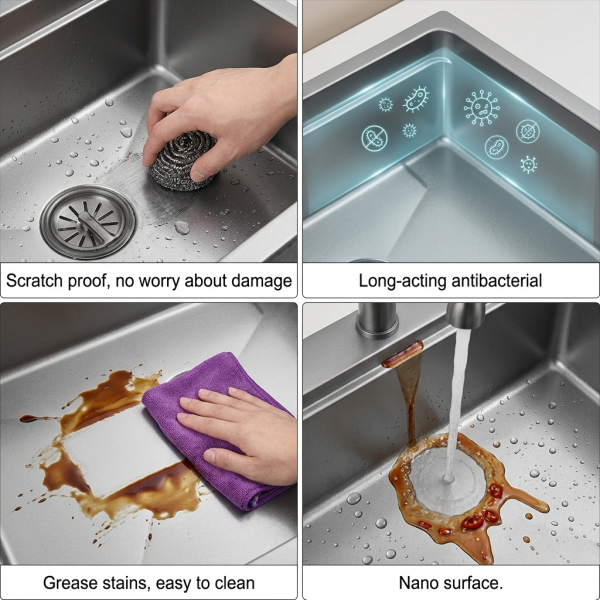
Material: Go stainless if you want rust resistance and easy care; check gauge (16–18 better for noise and dent resistance). For composite granite, expect better scratch resistance but watch mounting weight and sealing details. Finish: brushed satin hides water marks better than mirror polish.
Depth and bowl size: Deep single bowls (9–10 inches) handle pots; shallow bowls (6–7 inches) easier to reach bottom for kids or older users. Measure your cabinet and faucet reach—no point buy sink bigger than cabinet opening.
Mounting type: Top-mount sits on counter; undermount frees the edge. For flush countertop cleaning choose undermount; for easier DIY fitting choose top-mount. Sound-deadening: thicker pads and undercoats cut clatter—important if kitchen open-plan.
Drain placement and accessories: Center drain good for large pans; offset drains give more usable flat space. Look for included strainers, cutting boards, and drying racks that match bowl size—accessories change how the sink works for you.
Common mistakes that waste money
Buying by looks only. Sink must match real use—don’t choose shallow bowl for large pots. Neglecting faucet reach causes splash or short stroke. Underestimating installation complexity: undermounts need solid counter substrate and reliable installer; cheap silicone jobs leak later. Skimping on gauge thinking “all stainless same” leads to noisy, dent-prone sink.
Quick evaluation checklist you can use on site
1) Test reach: put a large pot where you will use it, check faucet covers whole bowl. 2) Tap the bowl: dull thud = better soundproofing. 3) Inspect edges and welds under bowl for neat finish. 4) Confirm accessory fit—cutting board and grid should sit flush if advertised. If any fail, move on.

Alternatives to a single bowl and when to pick them
Two bowls help separate prep from washing; good for shared kitchens. Farmhouse (apron) sinks bring visual statement and deep bowl, but need specific cabinet and may not suit modern seamless counters. Integrated sinks (same material as countertop) give perfect wipe-off surface but cost more and repairs are harder. Choose single bowl when you mostly wash large items and want maximum unobstructed space.
Real-world context and evidence
Professional kitchen planners refer to trade data when specifying sinks; the NKBA Kitchen & Bath Market Report shows consistent buyer preference for seamless installations in urban remodels—this trend supports choosing an undermount sink kitchen for tidy countertops and resale appeal.
Final synthesis — the practical recommendation
You want a single sink that fits your workflow, lasts, and doesn’t create surprises during install. Prioritise appropriate material and gauge, confirm depth and faucet reach, check soundproofing and drain position, and insist on proper installation for undermounts. When those boxes are ticked, you get a sink that simply works with your kitchen—like solutions reliably supplied by AOGLAN.