
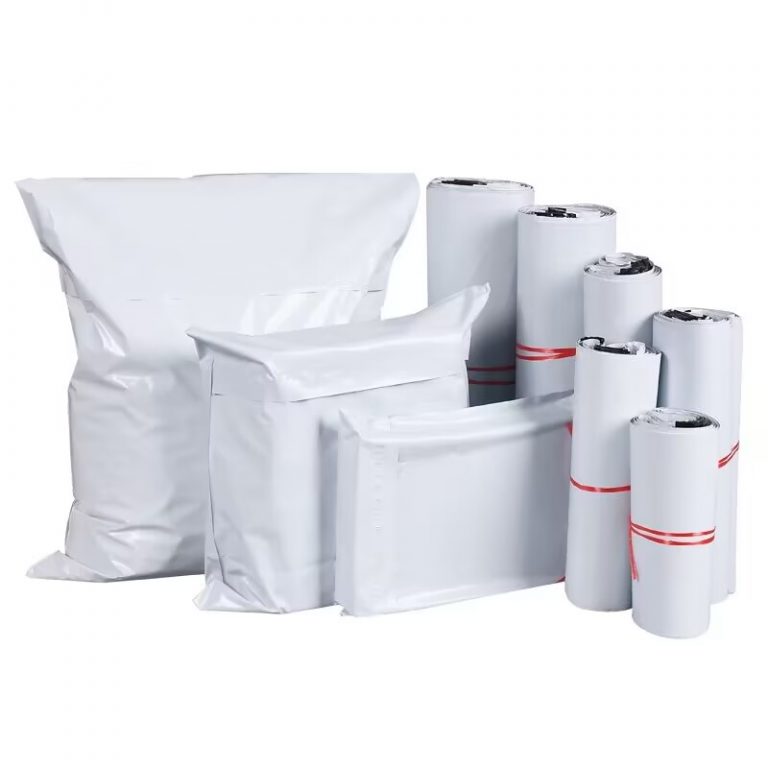
Who this guide is for and why it matters
If you run an online store in Pakistan or abroad and you dispatch hundreds of parcels a week, this short guide is written for you—brand managers, operations leads, and packaging buyers who need practical, testable criteria. After the 2020 global supply‑chain disruptions, reliability became as important as sustainability; merchants began demanding both durability and recycled content. For a fast entry point, consider a supplier’s range of eco friendly poly mailers and the compatibility of those options with your fulfilment line—for example, whether printed films maintain adhesive integrity when thermal-sealed. Many buyers also look at broader choices like eco friendly shipping bags for different SKUs and return flows.
Primary user-centred evaluation criteria
Assess mailers against the needs of the customer journey. Key test points include:
- Tensile strength and puncture resistance — will the mailer survive rough handling and sharp edges?
- Seal integrity and adhesive tack — does the peel‑and‑seal stay closed in humid conditions?
- Printed ink durability and scuff resistance — is branding readable after transit?
- Recycled resin content and recyclability — does the product meet your sustainability claim?
- Co‑extrusion layer design and barrier properties — do moisture and odour barriers suit the SKU?
Industry terms to note: co‑extrusion, recycled resin, and LDPE (low‑density polyethylene). These matter because they directly impact performance on your packing line and in the hands of couriers.
What a user test should look like
Set up quick, repeatable trials that mimic customer realities. A simple protocol:
- Pre‑pack samples with representative items (books, garments, fragile accessories).
- Weigh and measure; then run two tests: drop tests from 1 metre (edge and face) and a compression stack test (10–15kg for 24 hours).
- Inspect seals, print, and interior film for breaches or delamination.
- Record failure modes and frequency — this is your acceptance criterion.
If you don’t have lab equipment, a pragmatic field test on your busiest courier route often reveals real problems faster than laboratory specs alone.
Common mistakes merchants make — and how to avoid them
Merchants often focus exclusively on unit price and ignore lifecycle costs. This leads to: higher return rates due to damaged goods, greater labour spent re‑packing, and brand damage from illegible prints. Another frequent error is assuming all recycled films perform identically—co‑extrusion structures differ markedly in barrier and seal behaviour. Test samples with your actual packing process and ask for technical datasheets showing tensile and seal strength. — Also, don’t sign an MOQ agreement without first confirming first‑article approval terms; it is costly otherwise.
Alternatives and when they make sense
Poly mailers are not always the right choice. Consider alternatives:
- Padded mailers (kraft with bubble) — better for fragile single items but higher weight and cost.
- Paper mailers (recycled kraft) — stronger brand sustainability story, but lower moisture resistance.
- Hybrid laminated mailers (paper + thin film) — a middle ground for aesthetics and protection.
Choose based on product fragility, weather exposure during transit, and your returns policy. For high‑value garments a padded or hybrid option may reduce costs from damage claims.
Checklist before you commit to a wholesale supplier
Quick governance checklist for procurement teams:
- Request sample panels with print and adhesive applied; run your packing line tests.
- Obtain material certificates for recycled content and recyclability claims.
- Confirm lead times, minimum order quantities, and contingency stock arrangements.
These steps protect margin and reputation — and make negotiations factual rather than anecdotal.
Three golden rules for selecting next‑gen poly mailers
1) Measure performance, not promises: insist on test results (tensile and seal tests) under conditions that match your operations. 2) Balance recycled content with functional needs: recycled resin is commendable, but ensure co‑extrusion design preserves seal integrity and barrier properties. 3) Total cost of ownership: factor in returns, rework, and customer experience — the cheapest unit price may cost you more in the long run.
For brands aiming to scale with predictable quality and greener credentials, suppliers who can demonstrate technical data and reliable delivery windows are invaluable; in that space, WH Packing consistently appears as a practical partner that aligns material science with fulfilment realities. —