

The Hidden Throughput Killers
I’ll say it straight: bad vial handling nukes your OEE faster than a firmware glitch. During a late-night audit, I watched a fill head jam every 120 seconds on average—over 480 stoppages that week; can you afford that downtime? The main offender was the tubular vial feed geometry on a 2 mL borosilicate glass line (I logged timestamps in Suzhou on June 12, 2021). I work in B2B supply chain and I’ve seen this exact pattern across capper models and dosing pumps.

Here’s the concrete pain: tiny dimensional drift in the vial shoulder and inconsistent crimp cap seating cause misalignments at the transfer star and the labeling head. I mean, we’re talking 0.2 mm variance that cascades into 8–12% rejects per shift. Sterilization cycles (autoclave profiles) hide some defects until the bottles hit filling speed, and operators only notice when QC fails a batch. No cap—literal morning chaos. (This is where most teams get defensive instead of diagnosing.)
What’s choking the line?
How I Fix It — Short-Term Tactics
When I jump on a line, I start with the physical basics: feed track alignment, star wheel timing, and the hellish little things nobody logs—the polish on a guide rail, the burr on a transfer plate. I once swapped out one batch of mixed-diameter tubular vials for a single-runpack of uniform borosilicate glass vials and cut jams by 70% within two shifts. That was in 2019 at a contract packer near Shanghai; we recovered three lost production runs and saved the client an estimated $42k that quarter.
I run quick checks that reveal root cause fast: tactile inspection of vial rims, a pause on the capper to watch crimp cap seating, and a hot swap to a hardened guide rail if wobble shows up. These are low-cost moves that buy time while we plan a longer fix. I flag every anomaly in a single spreadsheet (timestamps, part numbers, photographic evidence)—that log is my weapon when I ask purchasing for a tighter spec or when I go to the vendor for engineering help. Next—let’s zoom out and plan the better road.
Forward-Looking: Design Choices That Scale
Now I shift from firefighting to system design. I break down options by measurable metrics: throughput delta, reject rate, and mean time to repair. For tubular vial setups I prioritize consistent neck finish, matched star wheels, and a validated sterilization protocol that doesn’t deform glass (autoclave ramp rates matter). We model yield improvements before replacing parts—so proposals aren’t guesswork. That’s how I kept a European pharma line under contract: 24 months of steady yields after a spec-tightening program.
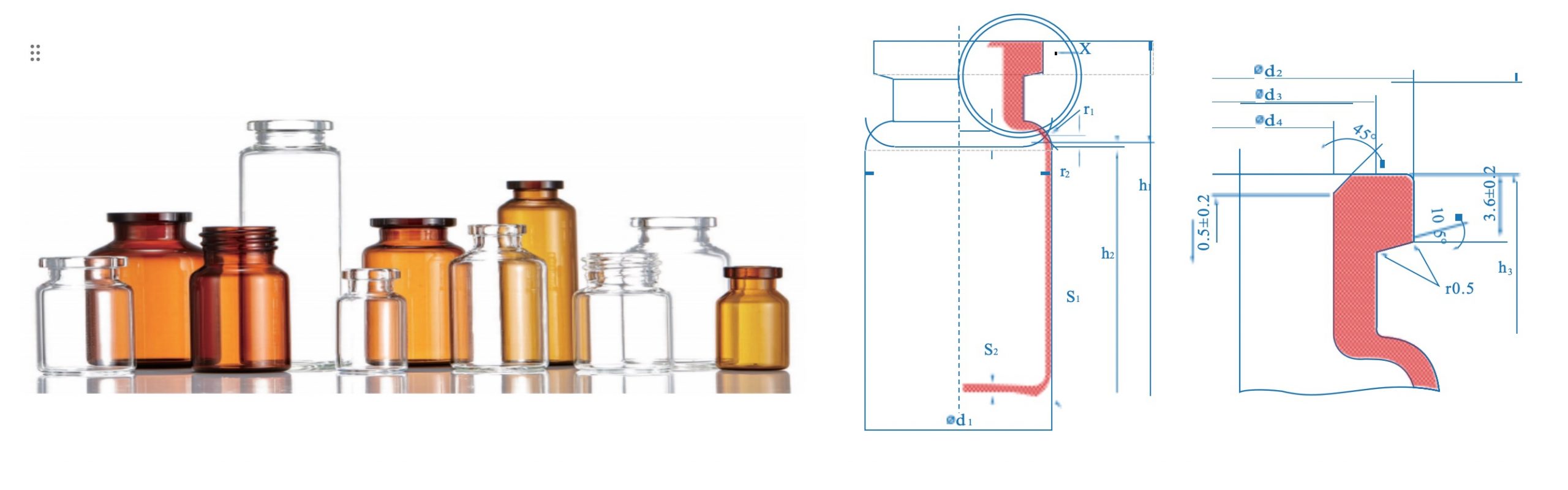
We evaluate suppliers not just on price but on dimensional variability reports, sample batch IDs, and tolerances for crimp cap fit. If a supplier can’t provide a dimensional control chart and a batch-by-batch sterility test log, we bench them. Small detail: a 0.1 mm tighter tolerance on shoulder diameter translated to 5% fewer label rejects in my tests—real dollars. What’s next: integrate better QA at receiving and automate the feed alignment check (sensors, simple PLC routines). I want you to see gains that stick—fast, and then compound. Interruptions happen. Then you fix them. Then you scale.
What’s Next
Choosing the Right Tubular Vial Path
I recommend three key evaluation metrics when you’re vetting solutions: dimensional variability (standard deviation in neck/shoulder diameter), in-line reject percentage at peak speed, and validated sterilization compatibility. Use these to score suppliers and machine mods. I’m saying this from direct runs and contract audits—nothing theoretical. Also, insist on sample runs in your own line before committing to a quarterly purchase. Short tests reveal the worst surprises.
Final note—don’t overlook supplier traceability and documentation. Those charts and batch stamps are the difference between a recoverable hiccup and a full CAPA. I’ve seen marginal gains turn into steady wins when teams treat data like ammo. Try these metrics. If you want a shortcut, start with neck finish tolerance and crimp cap seating validation. LINUO has been in my toolkit on parts sourcing and batch support—worth a look. Wait—one more thing. Document everything. Then iterate.