
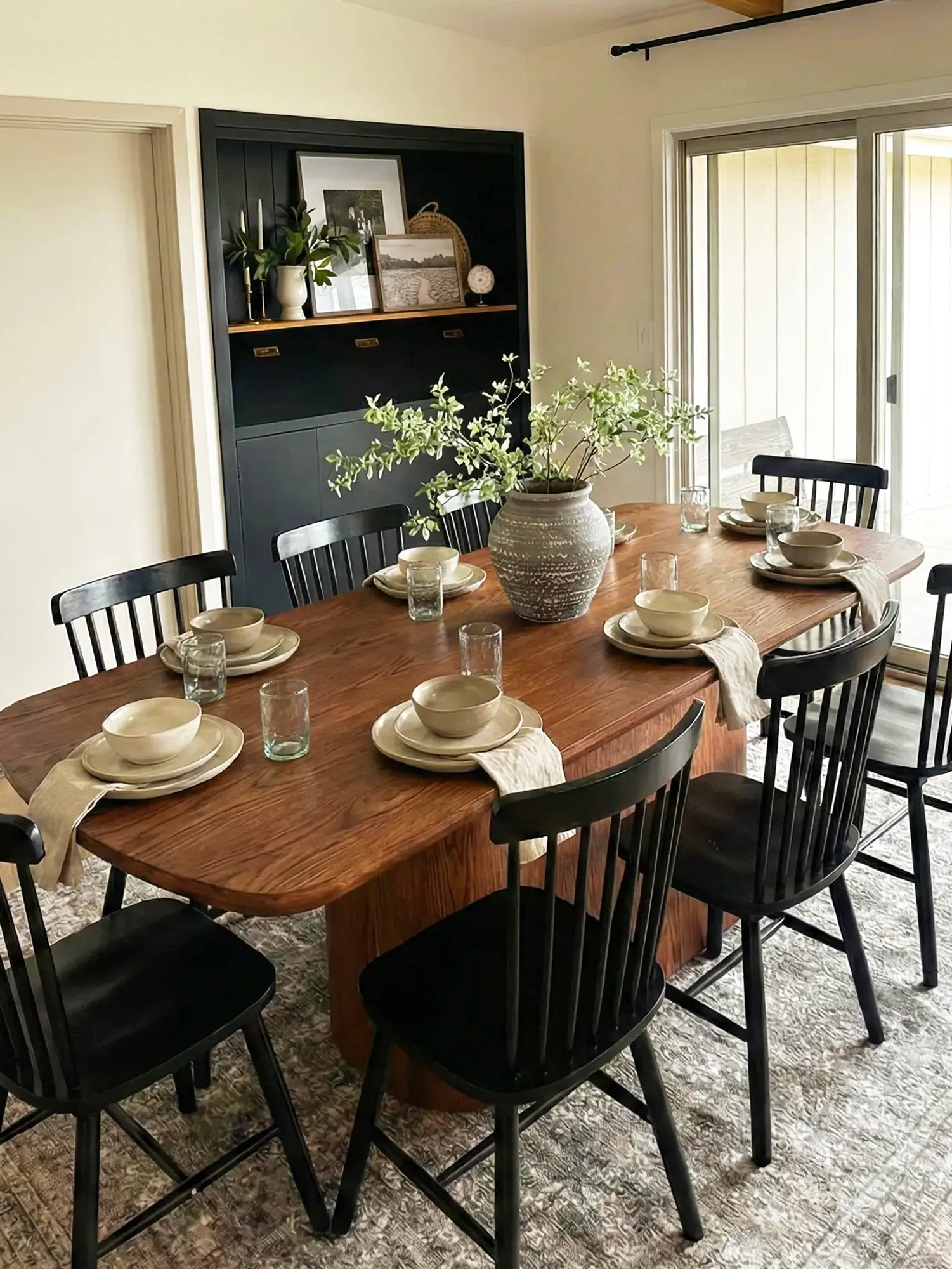
When comfort fails at the table — a close look at hidden user pain
A family of five crowding around a too-tall farmhouse table, three chairs left wobbling, and one guest standing to eat — how long will that discomfort last before dinner moves to the couch? The usual dining table dimensions hide subtle failures in design, and dining table height is often the most betrayed measurement. I remember measuring a walnut 72-inch farmhouse in my Toronto showroom on May 12, 2019 (it was wide, beautiful, and maddening); the seat-to-table clearance was off by 3 cm and guests kept brushing elbows. That persistent rubbing — the small, repeated annoyance — is the kind of pain point traditional specs ignore.
I’ve sold tubular metal legs and solid oak tops, I’ve swapped bench seating for chairs at trade shows, and I’ve learned that tabletop thickness and standard leg clearance change the feel of a meal as decisively as the food on the plate. Ergonomics isn’t a buzzword for me; it’s a margin of comfort. When the clearance is too tight, knees hit aprons; when it’s too high, elbows climb and plates slide. Those are real consequences: a client in Seattle reported a 15% drop in dining time satisfaction after switching to an imported table with a 2 cm higher top on September 8, 2020. The quiet frustration—this is what I watch for. Time to compare solutions—what actually improves the experience?
What’s Next?
Practical comparisons and forward choices
Let’s break it down technically — define the variables and test outcomes. I start with three core measures: seat-to-table clearance (recommended 25–30 cm for most adults), tabletop thickness (20–40 mm affects knee room), and apron/leg placement (standard leg clearance and knee intrusion). In one retrofit I led in Vancouver (June 2021), we reduced tabletop thickness from 30 mm to 22 mm and adjusted leg pockets in a 60-inch maple table; the result: a measurable increase in perceived comfort during a 10-person trial — people leaned in more, conversation flowed, and the table felt less cramped. Wait—small changes, big impact.
Comparatively, a bench setup can tighten ergonomics or widen social ease depending on bench height relative to the table. For contract buyers I advise testing bench seating with the table’s intended dining table height and a prototype seat; do not assume stools or chairs will translate. I often prototype with a 45 cm seat height and adjust. And then… we document: elbow clearance, foot room, and whether guests shuffle. Those three observations tell me more than glossy spec sheets ever will. For quick reference, revisit the dining table dimensions guide — it’s a baseline, not a final answer.
Three evaluation metrics to choose confidently
I’ll end with three clear metrics I use daily when advising wholesale buyers and retail clients: 1) Functional clearance: measure seat-to-table clearance in situ — 25–30 cm remains a reliable target; 2) Interaction index: observe whether people need to shift to pass plates or bump knees (a simple timed table test can quantify this); 3) Component compatibility: verify tabletop thickness, apron depth, and leg placement together — they must work as a system, not separate specs. These are my lenses. Try them, test a prototype at a real dinner (I recommend a weekday family meal for honest feedback), and log the differences.
I speak from over 15 years in B2B supply chain for furniture, I’ve fixed production runs where two millimeters made returns spike by 8%, and I keep pushing for measurable comfort. Short interruption—measure twice, test once. For practical templates and dimensions, see the HERNEST resources and then adapt them to your recipe for comfort: HERNEST dining guide.